Chris Barnes Talks The Australian Pink Floyd Show, Pink Floyd’s Legacy and the 2026 Tour
The Australian Pink Floyd Show continues its nearly four-decade celebration of Pink Floyd’s music with the Happiest Days of Our Lives Tour 2026, bringing the acclaimed production to audiences around the world.
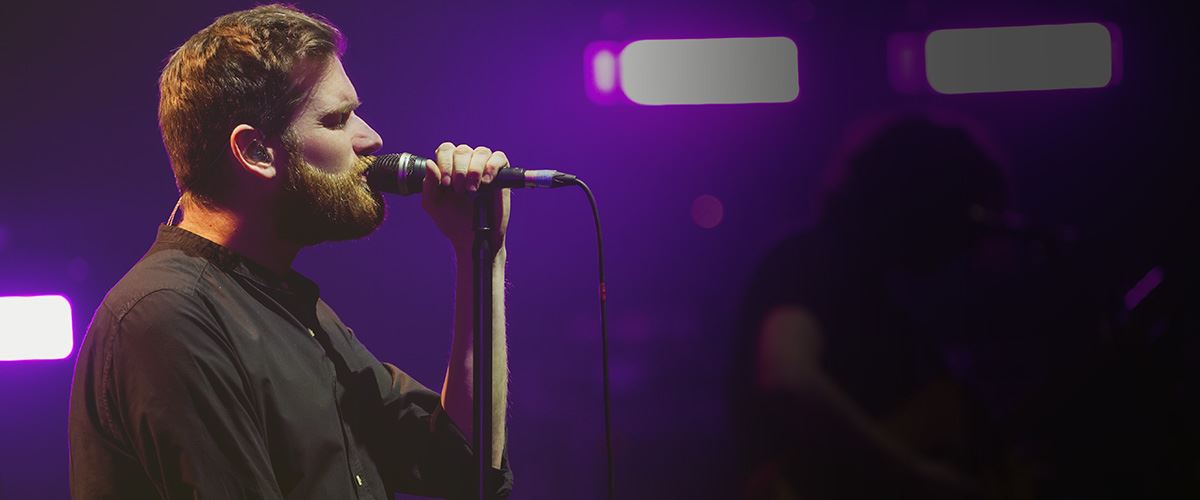
Ahead of the band’s September 3, 2026 performance at the Scotiabank Centre in Halifax, Nova Scotia, Jason Saulnier spoke with Chris Barnes, lead vocalist of The Australian Pink Floyd Show, on August 12, 2026.
During the interview, Barnes discusses life with The Australian Pink Floyd Show, performing some of the most recognizable music in rock history, and the responsibility that comes with recreating the sound and atmosphere of Pink Floyd for audiences around the world.
The Happiest Days of Our Lives Tour
The 2026 Happiest Days of Our Lives Tour draws from across Pink Floyd’s extensive catalog, giving fans a chance to experience music spanning the different eras of the legendary British band.
The music is only part of the experience.
The Australian Pink Floyd Show has become known for recreating the scale and theatrical nature associated with classic Pink Floyd concerts. The current production features an elaborate stage set, video animation, high-resolution LED screens, precision lasers, extensive lighting and large inflatables — including the unmistakable giant pig and TAPFS’s own Pink Kangaroo.
Combined with the band’s attention to the sound and arrangements of Pink Floyd’s music, the production is designed to be much more than a traditional tribute-band performance.
Nearly 40 Years of The Australian Pink Floyd Show
The Australian Pink Floyd Show traces its beginnings to Adelaide, Australia, in 1988. What started in Australian bars and clubs eventually developed into an international touring production.
TAPFS has since performed in more than 35 countries and sold millions of concert tickets worldwide, establishing itself as one of the most successful tribute acts in music.
The group’s connection to Pink Floyd’s history goes beyond simply performing the band’s songs.
Pink Floyd guitarist David Gilmour invited The Australian Pink Floyd Show to perform at his 50th birthday celebration, and members of Pink Floyd have supported the production over the years. Gilmour and the late Richard Wright have also performed with members of TAPFS.
The show has additionally worked with musicians connected directly to Pink Floyd, including Guy Pratt, Durga McBroom and Lorelei McBroom.
Keeping Pink Floyd’s Music Alive
For Chris Barnes and the musicians of The Australian Pink Floyd Show, performing this material means taking on songs that generations of listeners know intimately.
Pink Floyd’s catalog is filled with distinctive guitar tones, vocal performances, sound effects and atmospheric production. Recreating that material live requires both musical precision and an understanding of what made the original recordings and concerts so memorable.
At the same time, TAPFS has developed its own identity during nearly four decades of touring.
Rather than simply reproducing the notes, the production celebrates the complete Pink Floyd experience — combining the music with the visuals, lighting, lasers and theatrical elements that became an important part of Pink Floyd’s legacy.
Chris Barnes Interview – The Australian Pink Floyd Show
Interview by Jason Saulnier | August 12, 2026
Jason Saulnier interviews Chris Barnes of The Australian Pink Floyd Show on August 12, 2026, during the band’s North American tour.
In the interview, Barnes discusses the enduring popularity of Pink Floyd’s music and how The Australian Pink Floyd Show is attracting younger generations of fans. He also talks about the band’s return to Canada, including Halifax, Nova Scotia, and reflects on the enthusiastic Canadian audiences the group has encountered over the years.
Barnes shares his thoughts on the newly restored Pink Floyd at Pompeii, explaining how seeing the original concert film as a teenager played an important role in his own connection to Pink Floyd. He discusses Pink Floyd’s pioneering approach to concert sound, lighting, visuals and technology, as well as his appreciation for different eras of the band’s catalogue.
The conversation also explores life on the road with The Australian Pink Floyd Show, the friendships between longtime members of the touring family, how songs make their way into the setlist, and the band’s Happiest Days of Our Lives tour.
Interview Transcript
Jason Saulnier: Chris, how are you doing?
Chris Barnes: I’m really good, thanks. We’ve just had a couple of days off near L.A. in California. We’re having a nice couple of days chilling out, visiting guitar shops and feeling like normal people instead of living on a tour bus.
Jason Saulnier: And you’re wearing an Iron Maiden shirt.
Chris Barnes: Absolutely. Got to fly the flag for the Irons.
Jason Saulnier: You guys are doing a U.S. tour right now, and then you’re coming to Canada, from Nova Scotia toward Quebec and elsewhere. With all the years you’ve been playing, do you find the audiences in Canada are getting larger?
Chris Barnes: Definitely. One thing we’ve noticed and talked about over the last couple of years is that the audience is getting younger as well, which is really good to see.
This music is living on generation to generation, which is obviously a healthy thing for us, but it’s also great to know that good music never dies.
Pink Floyd’s music is so iconic. It’s music in its own box. It’s not just a classic rock band or a prog rock band. It’s Pink Floyd’s music.
To look out and see people my dad’s age in the audience, or my age, or my kids’ age, is fantastic. It’s great to know people are really discovering this music. Look at vinyl sales—they’ve gone through the roof. This great music just keeps living on, which is fantastic.
Jason Saulnier: On September 3, you’re coming back to the Scotiabank Centre in Halifax. Do you have good memories of coming to Halifax?
Chris Barnes: Yes, we do. We’ve done it a few times. Canada in general has always been really kind to The Australian Pink Floyd Show, with large turnouts.
The crowds are always really large in Canada. A couple of years ago, we did quite a few gigs in your neck of the woods. We played hockey arenas, and there were huge crowds. The atmosphere was electric. It was superb.
We can’t wait.
Jason Saulnier: The tribute band almost feels as big as the real band sometimes.
Chris Barnes: It feels like it some nights! It’s not quite a stadium like Floyd played back in the ’70s or ’80s, but it’s wonderful.
The fans are as passionate as we are because, first and foremost, we’re fans in the band. We’re the nerdy guys who collected bootlegs and that kind of thing.
To see an audience full of people who know every word and start clapping at different sections because they know a certain guitar solo or keyboard solo is coming up—it’s wonderful.
It’s a shared experience. The energy just goes back and forth.
Pink Floyd at Pompeii
Jason Saulnier: I’m sure you watched the remastered Pink Floyd at Pompeii. What did you think of the new quality they’ve achieved?
Chris Barnes: It was stunning. It was like watching The Beatles: Get Back, where it feels like it was recorded yesterday.
Pompeii is why I’m here now, really. I’d grown up with the Relics album and all the early Syd Barrett stuff, but I saw the Pompeii concert on TV when I was about 14 and thought, “Oh my God, what’s this?”
That was my way in.
Later, I bought the VHS, then I got the DVD, and now there’s this super-remastered version where they’ve really cleaned up the footage and the audio sounds fantastic. I bought the vinyl copy when that came out as well.
Pompeii, for me, is a real highlight of the whole Floyd journey. To me, that’s the best live version of “Echoes.” It’s so good.
I could sit and watch that day after day. I’d never get bored of it. It’s such an important part of Floyd’s history for me.
Jason Saulnier: “Echoes” captures that moment so well. Seeing it in this quality makes it look like it was filmed yesterday. Every band should get that type of treatment.
Chris Barnes: That was the thing with Floyd. Whenever anything was done, it was always top-of-the-range equipment.
I never saw Floyd back in the day, but I know people who did, like my father-in-law, and they said the sound quality compared with other concerts was leagues ahead.
The PA was crystal clear. The drums were miked really well, and the clarity of the guitar and keyboard sounds was really good, which wasn’t necessarily the norm at the time.
Floyd, not only with sound but also with visuals and lights, were so ahead of the curve.
A few of the things they pioneered are now staples in the rock concert world. As technology progressed, Floyd were at the front of the queue. They embraced all these changes in multimedia.
Think about it—they were doing things like quadraphonic sound in the Syd Barrett era and using screen films before many people had even thought about it.
Back then, a band might just be four guys standing onstage in matching suits. Pink Floyd completely changed that.
They were groundbreaking in so many different ways.
Recreating the Pink Floyd Experience
Jason Saulnier: And you’re celebrating that every night yourself.
Chris Barnes: Yeah. It’s not just how long someone spends getting a guitar sound or a keyboard setting right.
Tom, who does our lighting show, makes sure that if we’re doing something from a certain era, the lighting reflects it.
Obviously, we’ve got the circular screen with films that relate to the song or the mood we’re trying to put across.
The Floyd presentation was just as important as the songs they were playing, and that’s something we replicate every night, whether it’s lasers, inflatables or the light show. It’s the whole package they were known for.
Rediscovering Pink Floyd
Jason Saulnier: Do you sometimes rediscover Pink Floyd? Maybe there’s an album you haven’t listened to for a while and you dive back into it?
Chris Barnes: I do. I’m not one of those people who, because this is my job, goes home and doesn’t listen to Pink Floyd. I’m a fan.
My favourite stuff is actually around the Pompeii era—the pre-Dark Side material.
I find it fascinating when you look at setlists on bootlegs and one night “Careful with That Axe, Eugene” might be nine minutes and the next night it could be 18 minutes. It’s the moods they went into each night and the journeys they would go into sonically.
I find it endlessly fascinating, so I do listen to bootlegs and things like that.
In recent years, I’ve also fallen in love again with the later-period material—the A Momentary Lapse of Reason and The Division Bell albums.
I remember those records coming out. When The Division Bell came out in 1994, I was listening to lots of current bands at the time, and suddenly Pink Floyd came in with a number-one album.
I’ve gone back to those albums 30 years later and thought, “You know what? They’re really good songs. The production is really good. The playing is really nice.”
Things like “On the Turning Away” and “High Hopes”—you fall in love with them all over again.
Life on Tour
Jason Saulnier: What’s touring life like for you—airports, hotels and doing shows every night?
Chris Barnes: You know the film Groundhog Day with Bill Murray, where he lives the same day over and over again? There’s an element of that in touring.
One thing we’re very lucky with in Aussie Floyd is that everyone in the band has been in the band for several years, if not many, many years. Our drummer has been in the band for 28 years.
These people become like your other family. I’m married and I’ve got five children, and my other family is all these people—this dysfunctional family that tours around in buses, airports and hotels.
A good example of how close we are as friends happened yesterday. A few of us went to a guitar shop, and when we came back, Dave, our guitar player, said he was doing a barbecue outside at the hotel.
He asked if anyone wanted to come down, and in the WhatsApp group, literally everyone was saying, “I’ll be down in a minute,” or “I’ll come down later.”
We all hang out. The other day, everyone went out for a meal.
I could imagine how horrible touring would be if people were isolated from each other or didn’t get along.
Touring can be stressful. People might think, “You just stand onstage for two and a half hours a night. That’s not a job.” But you’re living out of a suitcase for over half the year.
Your day begins in the evening when most people are winding down and maybe going out to watch a concert.
Touring is a strange world. It’s not a normal lifestyle.
Jason Saulnier: It’s like a continuous version of the circus from the 1800s.
Chris Barnes: Yeah, it is. It’s a freak show on wheels!
Jason Saulnier: Except now you’re flying to the shows.
Chris Barnes: That’s true. No horse-drawn carriages anymore!
Friendship Within The Australian Pink Floyd Show
Jason Saulnier: The story about Dave saying, “Let’s do a barbecue,” and the whole band showing up within minutes says a lot about the friendship in the band.
Chris Barnes: Very much so.
If someone’s having a 50th birthday party or someone gets married, everyone’s there. It’s a big family.
Happiest Days of Our Lives Tour
Jason Saulnier: This tour is called the Happiest Days of Our Lives tour. Who decides on the tour names?
Chris Barnes: I seem to recall that one was just put out in a WhatsApp group: “We need a name for the tour. Anyone got any ideas?”
Steve Mac, a founder member and guitar player, came up with a list of about 50 names. It was basically, “Have a look through, see what you think, and see if you can think of anything else.”
Someone suggested “Happiest Days of Our Lives.” I think it might have been Ricky, our bass player.
It’s a greatest-hits tour this year. There’s no album theme, so it’s an appropriate name because every song in the set is a banger, as they say these days.
Jason Saulnier: You’ll never run out of names for tours.
Chris Barnes: No, not at all! The list Steve put out had about 50 names. There’s the next 50 tours!
Preparing for the Shows
Jason Saulnier: How many hours in a week do you spend preparing, or at this point do you basically know what you’re doing?
Chris Barnes: The setlist doesn’t really vary from night to night. It might depend on the venue. There might be a curfew, so you have to trim the set slightly.
At the start of the year, you know what you’re going to be doing for that year.
There may be some new songs. I was given a couple of songs I hadn’t sung before for this tour. At the start of the year, you’re thinking, “Right, get this right. Make sure you get this right.”
Now I look forward to those songs appearing in the set because they’ve become some of my favourite things to sing.
In terms of preparation, you can hear our backing vocalists an hour before the gig warming up in dressing rooms down the corridors. They’ve got really heavy-duty things to do when they’re doing “The Great Gig in the Sky.” I’m glad I don’t have to do that every night!
We have a decent soundcheck where we make sure everything is all right. We might run through a couple of things, or something we’re planning to do the following year.
A few songs have appeared in our set during my 10 years in the band because a couple of us were just jamming on something in the afternoon before soundcheck.
“See Emily Play” is a good example.
Ricky and I spent an afternoon where I was strumming a guitar and he was doing the bass parts. Steve said, “That’s ‘See Emily Play.’ That sounds really good. Maybe we should try that.”
The following year, in 2018, it was in the set. It’s been in the set several times since, and it’s in the set this year.
It’s a classic Syd Barrett pop song. It’s wonderful.
It came about by accident because we were messing around and stumbled across it.
Returning to Canada
Jason Saulnier: You’re heading to New Brunswick, Nova Scotia and Quebec in September. Where else in Canada are you going?
Chris Barnes: We’ve got a gig out at St. John’s. You’ve put me on the spot now because I’ve got to remember where we’re going!
It’s not far away. In a couple of weeks we’ll be up in Canada.
We always seem to end the tour in Canada. We’ll do Toronto and work our way around. I think we finish in Kitchener or somewhere like that.
It’s great to finish in Canada.
As a British person, Canada is kind of this interesting crossover of America and Europe—or Britain, really. It’s got the size of America, but it’s got a different vibe.
Obviously, there are the French-speaking parts of Canada as well. One of our guitar players is French.
My first introduction to the fact that Canada had a French-speaking part was listening to Rush. I remember hearing French in one of their songs and wondering, “Why is he singing in French?”
Jason Saulnier: Chris, I appreciate you taking the time. I wish you well with the tour coming to Canada and with The Australian Pink Floyd Show.
Chris Barnes: We’re looking forward to coming back. Thanks for having me on the show.
Jason Saulnier: Thank you very much. Have a good one.
Chris Barnes: Cheers. Thanks, Jason. Take care.